
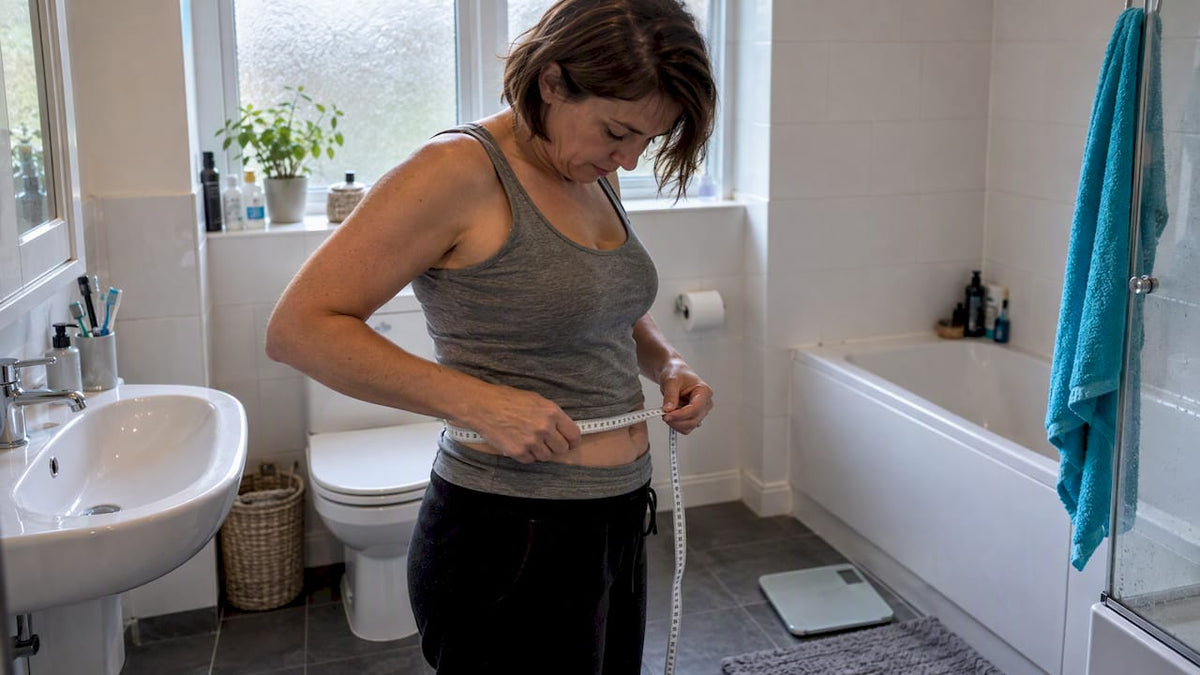
Metabolic age is an estimate that compares your resting calorie needs to population norms, so treat it as a trend metric, not a medical diagnosis. It comes from your basal metabolic rate and body composition, mapped against average figures for other ages. A lower reading can be motivating, but the real goal is building muscle, moving more and eating well, using the number as feedback rather than a verdict.
TL;DR:
- Consistent resistance training and adequate protein intake are the most effective ways to lower metabolic age by increasing lean muscle mass.
- Using the same device regularly and measuring under similar conditions ensures reliable tracking of metabolic age trends over time.
- Short-term fluctuations in hydration, recent exercise, or menstrual cycle can cause variation in readings, making long-term trends more meaningful than single measurements.
- Metabolic age correlates with cardiometabolic health markers but should not replace clinical tests, especially if device scores change unexpectedly.
- Building healthy habits, like improving sleep and stopping smoking, improves metabolic health but may only partly influence metabolic age, especially if underlying conditions exist.
Table of Contents
- What metabolic age means and how it differs from chronological age
- How metabolic age is calculated: BMR, BIA and reference databases
- Why metabolic age matters, and where the science runs out
- Main factors that influence metabolic age
- How to improve your metabolic age safely and realistically
- How to measure and monitor metabolic age: practical protocols
- Using metabolic-age metrics responsibly
- Tracking metabolic-age measures with Voltra
- FAQ
- Sources
What metabolic age means and how it differs from chronological age
Metabolic age takes your basal metabolic rate (BMR), the calories your body burns at rest, and compares it with the average BMR of people at different ages in a reference database. If your BMR matches the typical 30-year-old’s and you are 45, a device might report a metabolic age of 30. It sounds clever, but it is really a comparison exercise presented as a single number.
This differs from chronological age (how many years you have lived) and from the broader idea of biological age, which researchers use to describe how fast the body is ageing based on markers like cellular damage, lipid profiles or organ function. Metabolic age is narrower: it is built almost entirely from BMR and sometimes body fat percentage, run through a predictive equation.
A few things worth holding onto:
- A younger metabolic age reading usually means your lean mass is relatively high for your size, since muscle drives much of resting energy use.
- The number says nothing directly about your heart, blood sugar or long-term disease risk on its own.
- Two different devices can give two different metabolic ages for the same person, because they use different equations and reference groups.
None of that makes the metric useless. It makes it a motivational gauge rather than a clinical one, best read over weeks and months rather than taken at face value on any single day.
How metabolic age is calculated: BMR, BIA and reference databases
The calculation runs in three stages, and you can use a simple body fat percentage calculator online to estimate your own body composition alongside these device readings. First, a device collects personal inputs: height, weight, age, sex and sometimes activity level. Second, it estimates body composition, usually through bioelectrical impedance analysis (BIA), which sends a weak electrical current through the body and reads the resistance to estimate fat, muscle and water. Third, it feeds your BMR and body composition into a predictive equation and maps the result against a reference-age database built from population data.
BMR itself can be estimated several ways. Older formulas like Harris-Benedict and the more recent Mifflin-St Jeor use height, weight, age and sex to predict resting energy expenditure. Many consumer devices blend these with BIA-derived lean mass for a more personalised estimate. The gold standard, indirect calorimetry, measures oxygen consumption and carbon dioxide output directly in a lab setting, and it is rarely available outside clinical or research environments.
A systematic review of BIA accuracy found it can be acceptable at a population level but shows wide limits of agreement against four-compartment body-composition models at the individual level, meaning the device and equation you use genuinely changes your number. Separately, comparative studies of BMR measurement methods show that BMR estimated by BIA or standard equations can differ materially from BMR measured by indirect calorimetry, with the gap widening at higher BMI.
Several everyday factors shift a BIA-based reading from one day to the next:
- Hydration status, since water conducts electricity differently from fat or muscle.
- Recent exercise, which temporarily changes blood flow and fluid distribution.
- Food and drink consumed shortly before the reading.
- Menstrual cycle phase, which can alter fluid retention.
None of these mean the device is broken. They mean a single reading is a snapshot, and the trend over time matters more than any one number. Our guide to body fat percentage accuracy on home scales covers this variability in more depth.
Why metabolic age matters, and where the science runs out

Metabolic age earns its place in a health routine because body composition and resting energy use genuinely track with health outcomes. Lipidomic research building metabolic-age models from large cohort data has found these scores associated with cardiometabolic outcomes including cardiovascular disease and diabetes, which suggests the underlying concept captures something real about metabolic health beyond the years on a birth certificate.
A 2025 study looking at people with type 2 diabetes found metabolic-age estimates correlated with insulin-resistance risk scales as well as chronological age and physical-rating scores. That is a meaningful association, not proof that a lower metabolic age causes better health, and the study does not establish that improving your device score will change your disease risk.
Device-derived metabolic age is a useful nudge toward better habits, but it is not a substitute for blood pressure readings, cholesterol panels or blood glucose tests.
The limits matter as much as the associations. Because BIA carries individual-level measurement error, and because manufacturers use proprietary equations and reference databases, comparing your score against someone else’s device, or even switching devices yourself, can produce a misleading jump or drop. The sensible use of the metric is within-device trend tracking: watch the direction of travel on the same machine over weeks, rather than chasing a specific target number. When a reading concerns you, or an app flags an unusually high value, the right next step is checking validated markers such as waist circumference, resting blood pressure or a GP-ordered blood test, not adjusting your diet based on the app score alone.
Main factors that influence metabolic age
Some drivers of your metabolic-age estimate respond well to lifestyle changes, others only partly, and a few sit outside your control entirely.
- Muscle mass: more lean tissue raises resting energy use, which is the single biggest lever most people can pull.
- Regular strength and aerobic activity: both support muscle maintenance and cardiovascular fitness, which feed into a lower estimate over time.
- Diet quality: adequate protein and balanced, wholefood eating support muscle retention, especially during weight loss.
- Sleep: poor sleep is linked with reduced insulin sensitivity and harder-to-maintain lean mass.
- Hydration and smoking status: hydration affects BIA readings directly, and quitting smoking supports broader metabolic and cardiovascular health.
- Thyroid health, certain medications and chronic disease: these can shift BMR in ways that diet and exercise cannot fully offset, so they sit in a partly modifiable, often clinical category.
- Chronological age, sex and ancestry: these set your baseline BMR and cannot be changed, which is exactly why the metric should be read as a comparison to a reference group, not a fixed destiny.
Population-level research backs up the modifiable end of this list: cross-sectional data has found physical inactivity and poor diet adherence among the strongest correlates of higher metabolic age across large samples.
How to improve your metabolic age safely and realistically
The most reliable lever is building and keeping muscle, because lean tissue burns more calories at rest than fat tissue does. Two to three resistance sessions a week, covering the major muscle groups with compound movements like squats, rows and presses, is a realistic starting point for most adults, with progressive increases in load or repetitions over subsequent months.

NHS physical activity guidance for adults recommends at least 150 minutes of moderate activity or 75 minutes of vigorous activity each week, alongside muscle-strengthening activity on two or more days. That combination, cardiovascular work plus resistance training, is the public-health foundation most likely to shift both body composition and a device-derived metabolic-age score.
Diet matters just as much as training, and the NHS Eatwell guidance points towards a varied diet with adequate protein, fibre-rich starchy foods and unsaturated oils in place of chasing single “metabolism-boosting” foods or supplements. Protein intake in particular supports muscle retention, especially when combined with resistance training during any period of weight loss.
A few supporting habits round out the picture:
- Prioritise consistent sleep, since poor sleep undermines both training recovery and appetite regulation.
- Stop smoking where relevant, given its broader metabolic and cardiovascular costs.
- Pursue weight loss at a measured pace rather than through severe restriction, which tends to cost muscle along with fat.
- Ask a GP about thyroid function or other clinical tests if your energy levels or weight trends seem out of step with your habits.
Pro Tip: Expect your device’s metabolic-age score to lag behind real body-composition change by several weeks, since muscle gain and fat loss happen gradually while the display number updates with every reading.
Set your expectations around repeatable habits rather than a specific number by a specific date. Our practical plan for lowering metabolic age over two to three months walks through a training, protein and tracking routine built around this pacing.
How to measure and monitor metabolic age: practical protocols
Consistency of method matters more than the absolute number, so a simple protocol makes the trend worth trusting.
- Measure at the same time of day, ideally first thing in the morning before food, drink or exercise.
- Use the same device every time, since switching hardware or apps resets your comparison baseline.
- Keep hydration status similar, as fluid levels change BIA readings independently of any real body-composition shift.
- Log context notes alongside each reading: recent exercise, food, menstrual cycle phase or any new medication, so unusual swings have an explanation.
Our seven-step protocol for bioimpedance scale accuracy expands on the conditions that matter most for a reliable reading.
Alongside the device score, a handful of companion metrics carry more clinical weight: waist circumference, body-composition trends over months rather than days, resting heart rate, blood pressure and, when indicated, standard blood tests for glucose and lipids. A 2025 study of 122 people with type 2 diabetes found metabolic-age estimates correlated with insulin-resistance risk markers, reinforcing why these clinical checks belong alongside, not instead of, a home device reading.
If your metabolic-age score jumps sharply with no change in training, diet or sleep, or if it is paired with unexplained weight change, fatigue or other symptoms, that combination is worth raising with a GP rather than troubleshooting through the app alone.
Using metabolic-age metrics responsibly
The single reading obsesses too many people who buy a smart scale. A number appears, it feels either encouraging or alarming, and the instinct is to chase it with whatever diet or supplement promises a quick fix. The more useful habit is almost boring by comparison: take the reading under similar conditions every week or two, watch the direction over a couple of months, and let the big, well-evidenced habits (resistance training, enough protein, consistent sleep) do the work.
Case-study style tracking, where someone logs sleep, activity and body composition together over weeks rather than relying on one isolated number, is a decent template for how to treat this kind of data. It is an example of the trend-based approach this article recommends, not a replacement for a GP visit or a blood test when something looks genuinely off. Combining ongoing home tracking with periodic clinical checks gives you both the daily feedback loop and the occasional reality check that keeps it honest.
— Sam
Tracking metabolic-age measures with Voltra
If the protocols above sound worth following but you would rather not juggle a stopwatch, a notebook and three separate apps, there are devices designed to close that gap by tracking body composition, sleep, heart health and activity in one place, often with companion apps offering free access and no subscription fees between you and your data.
That matters for metabolic-age tracking specifically, because the whole point is consistency over time rather than one-off readings, and a free, always-on app makes it easier to actually keep logging. Our product range covers different needs: VOLTRA AIR at £99.99, VOLTRA PRO at £129.99 and VOLTRA CORE at £149.99, each a one-off purchase with no recurring charges for full data access.
As with any BIA-based device, the readings remain approximations rather than clinical diagnoses, so pair them with your GP’s guidance when something looks unusual. Compare the full range and find the one that fits how you want to track.
FAQ
What’s the hardest age to lose weight?
There is no single fixed age at which weight loss becomes hardest, since it depends on individual muscle mass, hormonal changes and activity levels rather than age alone. Midlife hormonal shifts and gradual muscle loss can make fat gain easier and loss slower for many people, which is one reason strength training becomes increasingly valuable with age.
Is it good if my metabolic age is younger than my age?
A metabolic age reading below your actual age generally reflects relatively higher lean mass or a higher resting energy use for your size, which is a reasonable sign. It is not proof of excellent overall health on its own, since the device score does not capture markers like blood pressure, cholesterol or blood glucose.
How do I lower my metabolic age?
Building and maintaining muscle through regular strength training is the most direct lever, supported by meeting NHS activity guidelines of 150 minutes of moderate activity weekly plus two strength sessions. Pairing that with a balanced, protein-adequate diet following NHS Eatwell principles and consistent sleep supports the same goal over weeks and months.
Will my metabolic age go down if I lose weight?
Weight loss alone does not guarantee a lower metabolic age, since losing muscle alongside fat can leave the underlying BMR-to-body-size ratio unchanged or even worse. Weight loss that preserves or builds muscle, through resistance training and adequate protein intake, is far more likely to shift the estimate in a favourable direction.
Sources
- Physical activity guidelines for adults aged 19 to 64 - NHS
- Study linking metabolic-age estimates with metabolic health markers (MDPI, 2025)
- The validity of BIA compared to a four-compartment model: systematic review - PMC
Share:
Fat Loss vs Weight Loss: Lose 0.5–1 kg per Week While Keeping Muscle
Researchers: PPG vs ECG: AF 95.6% Sensitivity, Report Data Loss