
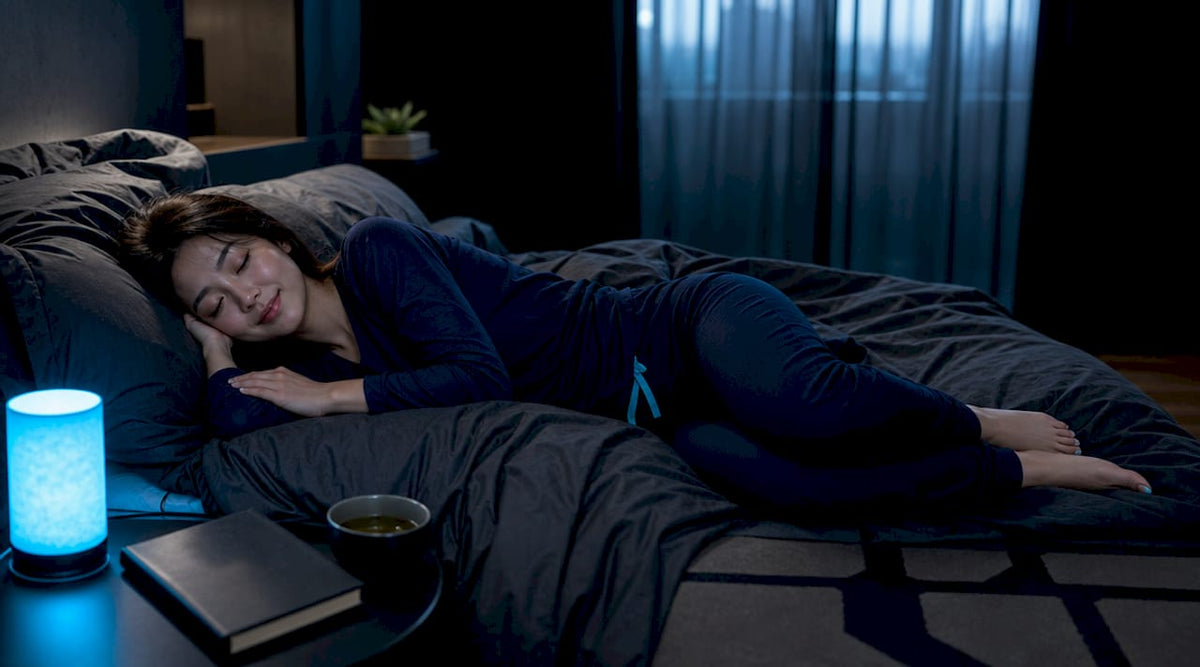
Quality sleep is defined as the brain’s primary biological mechanism for regulating anxiety, not merely a passive rest state. The role of sleep in anxiety management is now backed by specific neuroscience: particular sleep stages actively suppress stress circuits in the brain, reducing anxiety levels overnight. Research from Stanford Medicine and the Cleveland Clinic confirms that poor sleep and anxiety form a two-way cycle, each worsening the other. Cognitive behavioural therapy for insomnia (CBT-I) is the gold-standard intervention that breaks this cycle. Understanding how sleep affects anxiety gives you a concrete, evidence-based path forward.
What brain mechanisms link sleep and anxiety regulation?
Slow-wave sleep (SWS), also called deep sleep or non-REM stage 3, is the stage most directly responsible for overnight anxiety reduction. A 2026 study published in Neuron identified a specific brainstem circuit that explains why. GABAergic neurons in the parafacial zone activate during SWS and inhibit a pathway known as the LPB-ovBNST circuit, which drives stress-induced anxiety. When this circuit is suppressed during deep sleep, anxiety-like behaviour is prevented. This is not a theoretical model. Optogenetic activation of these neurons in research subjects induced SWS and stopped anxiety responses directly.
“Sleep neuroscience shows anxiety is influenced not only by thoughts but also by sleep-stage biology, especially slow-wave sleep’s active anxiolytic effects.” — Neuron, 2026
The LPB-ovBNST pathway connects the lateral parabrachial nucleus in the brainstem to the oval bed nucleus of the stria terminalis, a region central to fear and threat processing. When SWS is disrupted, this pathway remains active, keeping the brain in a low-level threat state even without a real stressor present. This is why you can wake from a broken night’s sleep feeling anxious before a single worrying thought has crossed your mind. The biology precedes the psychology.
Non-REM sleep more broadly also supports emotional memory processing. During these stages, the brain consolidates experiences from the day and strips away the emotional charge attached to distressing memories. Without sufficient non-REM sleep, those memories retain their full emotional weight, making anxiety responses more intense the following day. The practical implication is clear: protecting your deep sleep is not optional if anxiety management is your goal.

How does sleep deprivation affect anxiety and mental health?
Sleep deprivation does not simply leave you tired. It actively dismantles your brain’s capacity to regulate emotion. Those with insomnia are 17 times more likely to experience clinically significant anxiety than those who sleep well. That figure reframes insomnia from a symptom of anxiety into a major risk factor in its own right.
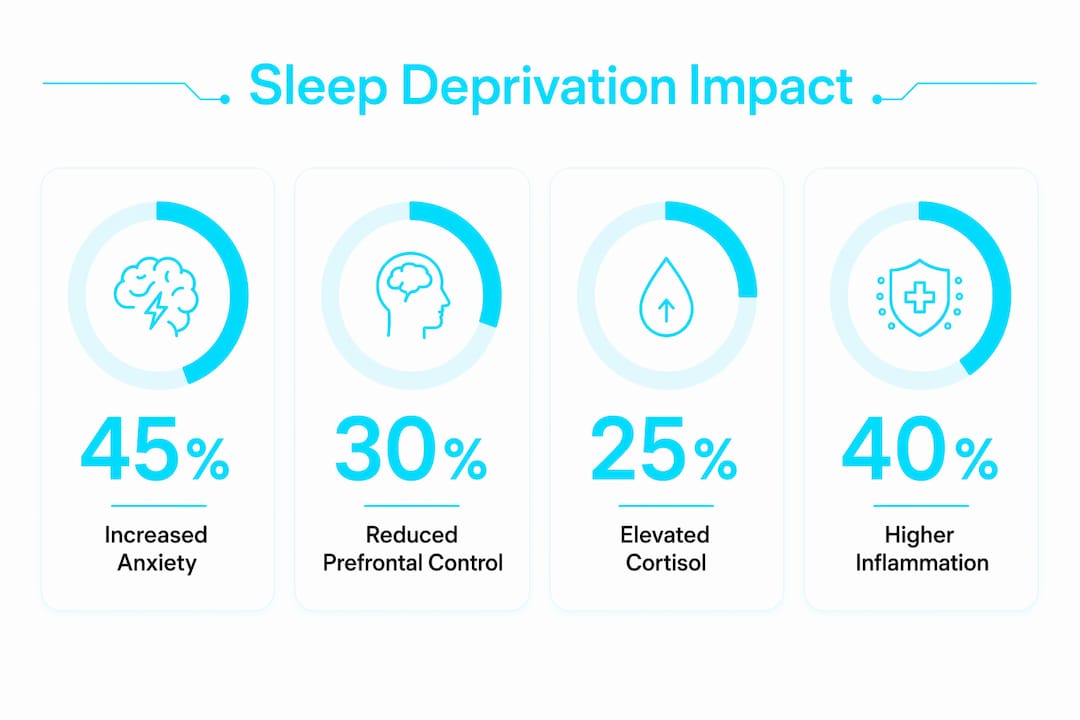
The role of sleep deprivation on anxiety operates through several overlapping mechanisms:
- Reduced prefrontal control. The prefrontal cortex, which governs rational thought and emotional regulation, is highly sensitive to sleep loss. Even one poor night reduces its ability to dampen amygdala reactivity.
- Elevated cortisol. Sleep deprivation raises cortisol levels, keeping the body in a physiological stress state throughout the following day.
- Pro-inflammatory pathways. Sleep loss raises pro-inflammatory cytokines associated with anxiety-like behaviour, indicating biological pathways that go well beyond psychological tension.
- Conditioned arousal. Over time, the bed itself becomes associated with wakefulness and worry, reinforcing the insomnia-anxiety loop.
It is worth distinguishing between trait anxiety, which is a stable personality tendency to worry, and state anxiety, which fluctuates with circumstances including sleep quality. Sleep deprivation primarily amplifies state anxiety, meaning that improving sleep quality and mental health outcomes are directly linked. You are not simply “an anxious person.” You may be a person whose anxiety is being sustained by poor sleep.
What evidence-based sleep treatments help reduce anxiety?
CBT-I, or cognitive behavioural therapy for insomnia, is the first-line clinical treatment for insomnia and produces measurable reductions in anxiety symptoms. Seven to eight out of ten people who complete CBT-I report significant sleep improvement, with benefits extending to anxiety and depression. Unlike sleep medication, CBT-I addresses the underlying thought patterns and behaviours that sustain insomnia rather than masking symptoms.
A full CBT-I programme typically includes these components:
- Cognitive restructuring. Identifying and challenging catastrophic thoughts about sleep, such as “If I don’t sleep eight hours I’ll fall apart tomorrow.”
- Sleep restriction therapy. Temporarily reducing time in bed to build homeostatic sleep drive. This feels counterintuitive but reduces conditioned arousal and anxiety over time.
- Stimulus control. Using the bed only for sleep and sex, so the brain stops associating it with wakefulness and worry.
- Relaxation techniques. Progressive muscle relaxation, diaphragmatic breathing, or body scan meditations to lower physiological arousal before bed.
- Sleep hygiene. Consistent wake-up times, limiting caffeine after midday, and a 30-minute wind-down period before bed.
A review of 28 high-quality studies confirmed CBT-I’s consistent efficacy across delivery formats and populations, with minimal adverse effects compared to sleep medication. Digital CBT-I programmes have also shown strong results. A randomised controlled trial published in JAMA Network Open found statistically significant improvements in both anxiety severity and sleep difficulty at 10 and 24 weeks. This means that if in-person therapy is not accessible, a structured digital programme is a clinically sound alternative.
Pro Tip: Schedule a 15-minute “worry time” earlier in the evening, writing down concerns and possible responses. This contains anxious thinking before bed rather than letting it flood in when the lights go out, a technique directly supported by CBT-I protocols.
How do age and individual differences shape sleep’s role in anxiety?
The relationship between sleep and anxiety is not uniform across the lifespan. Slow-wave sleep naturally declines with age, and this decline has direct consequences for overnight anxiety regulation.
| Age group | SWS characteristics | Anxiety regulation impact |
|---|---|---|
| Young adults (18–35) | High SWS amplitude and duration | Strong overnight anxiety suppression via PZ-LPB circuit |
| Middle-aged adults (36–55) | Moderate SWS decline begins | Partial reduction in overnight emotional processing |
| Older adults (56+) | Significant SWS reduction | Impaired overnight anxiety regulation; higher next-day anxiety |
A study in Communications Psychology found that impaired slow-wave activity fully mediates the relationship between age-related brain atrophy and next-day anxiety in adults over 55. This is a mediation model with statistical significance at P=0.03, meaning the brain changes of ageing increase anxiety primarily because they reduce deep sleep quality, not through a separate pathway. For older adults, protecting and improving sleep quality is therefore a direct intervention on anxiety risk.
CBT-I protocols are adapted for older individuals to account for naturally shorter sleep windows and different sleep architecture. Rigid sleep restriction, for example, is applied more cautiously. Individual differences also matter beyond age. People with high trait anxiety tend to have more fragmented sleep and less SWS regardless of age, creating a feedback loop that requires targeted intervention rather than generic sleep advice.
How can you practically improve sleep to manage anxiety?
Improving sleep to reduce anxiety requires breaking the cycle at multiple points simultaneously. Addressing only one factor, such as going to bed earlier, rarely produces lasting change. The following approach targets both the biological and psychological components.
- Set a fixed wake-up time. This is the single most effective anchor for your circadian rhythm. Keep it consistent seven days a week, regardless of how poorly you slept the night before.
- Create a wind-down period. Spend 30 minutes before bed doing something calming and screen-free. Reading, light stretching, or listening to calm audio all lower cortisol before sleep.
- Use your bed only for sleep. If you lie awake for more than 20 minutes, get up and do something quiet in low light until you feel sleepy. This rebuilds the mental association between bed and sleep.
- Schedule your worries. Write down anxious thoughts earlier in the evening with a brief note on what you will do about them. This signals to your brain that the problem is acknowledged and contained.
- Limit sleep-metric fixation. Obsessing over sleep-tracking numbers can increase arousal and worsen anxiety. Use data as a broad guide, not a nightly report card.
For sleep and anxiety relief that goes beyond self-help, a GP referral to a CBT-I practitioner or a structured digital programme is the appropriate next step. CBT-I is recommended by NICE guidelines in the UK as first-line treatment, ahead of sleep medication.
Pro Tip: If you use a wearable to track sleep, review your weekly trends rather than nightly scores. A single night’s data is noisy and often misleading. Weekly patterns reveal genuine progress and reduce the anxiety that comes from fixating on one bad night.
Key takeaways
Quality sleep actively reduces anxiety through specific brain circuits, and CBT-I is the most effective evidence-based method to restore both sleep and emotional regulation.
| Point | Details |
|---|---|
| Sleep is biologically anxiolytic | Slow-wave sleep suppresses the LPB-ovBNST stress circuit, reducing anxiety overnight. |
| Deprivation multiplies anxiety risk | Those with insomnia are 17 times more likely to experience significant anxiety than sound sleepers. |
| CBT-I is the gold-standard treatment | Seven to eight in ten people improve sleep with CBT-I, with concurrent reductions in anxiety symptoms. |
| Age reduces SWS and raises anxiety risk | Brain atrophy in older adults impairs slow-wave activity, directly increasing next-day anxiety. |
| Consistent routines break the cycle | Fixed wake times, worry scheduling, and stimulus control interrupt the insomnia-anxiety feedback loop. |
Why the biology of sleep changed how I think about anxiety
Most anxiety advice focuses entirely on the mind. Breathe differently. Think differently. Challenge your thoughts. That advice is not wrong, but it is incomplete in a way that frustrated me for years. What the 2026 Neuron research made clear is that anxiety is partly a biological state produced by what your brain does, or fails to do, during sleep. You cannot think your way out of a nervous system that has not had its overnight reset.
The CBT-I framework resonated with me precisely because it treats the bed as a site of learned behaviour, not just a place to lie down. The idea that your mattress can become a trigger for anxiety because of repeated associations is uncomfortable to accept, but accepting it is what makes the solution possible. Once you understand that the bed-arousal link is conditioned, you can decondition it systematically.
I have also seen people abandon sleep tracking entirely after it made their anxiety worse, and others use it as a genuinely useful feedback tool. The difference is almost always in how they interpret the data. Weekly trends are informative. Nightly scores are a trap. If you are going to use a wearable, build the habit of looking at patterns across seven to fourteen days. That is where the signal lives.
Patience matters more than most people expect. CBT-I typically takes four to eight weeks to show full benefit. Sleep restriction feels terrible in week one. The urge to abandon it is strong. But the research is consistent: those who persist see lasting improvements in both sleep and anxiety that medication rarely matches over the long term.
— Sam
Track your sleep, manage your anxiety with Voltrahealth
Understanding the biology of sleep is the first step. Seeing your own sleep data is what makes that knowledge personal and actionable.
Voltrahealth’s biometric health band tracks your sleep stages, heart rate, and stress signals throughout the night, all without a subscription fee. Over 100,000 users have used Voltrahealth data to understand how their bodies respond to stress, and 85% report improved sleep quality within the first 14 days. Whether you choose the VOLTRA Tracker or explore the full range of wearable options, you get continuous, real-time insight into the sleep patterns that drive your anxiety. Better data leads to better decisions about your sleep and your mental health.
FAQ
Can sleep cure anxiety?
Sleep cannot cure anxiety on its own, but consistently good sleep quality significantly reduces anxiety symptoms by resetting the brain’s stress circuits overnight. Combined with CBT-I, improved sleep produces clinically meaningful reductions in anxiety severity.
What is the insomnia and anxiety connection?
Insomnia and anxiety are bidirectional: poor sleep increases anxiety, and anxiety disrupts sleep. Research from Stanford Medicine shows those with insomnia are 17 times more likely to experience significant anxiety, making sleep a primary target in anxiety treatment.
How does sleep deprivation affect anxiety?
Sleep deprivation reduces prefrontal cortex control over the amygdala, raises cortisol, and increases pro-inflammatory cytokines, all of which amplify anxiety responses. Even one night of poor sleep measurably impairs emotional regulation the following day.
What is CBT-I and how does it help with anxiety?
CBT-I is cognitive behavioural therapy for insomnia, the first-line clinical treatment recommended by NICE and the Cleveland Clinic. It reduces both insomnia and comorbid anxiety by changing the thoughts and behaviours that sustain poor sleep, with seven to eight in ten patients reporting significant improvement.
Does age affect how sleep manages anxiety?
Yes. Slow-wave sleep declines with age, and research in Communications Psychology found this decline fully mediates the link between age-related brain changes and higher next-day anxiety in adults over 55. Older adults benefit from adapted CBT-I protocols that account for naturally shorter sleep windows.
Share:
Research Backed 7 Step Protocol for Bioimpedance Scale Accuracy